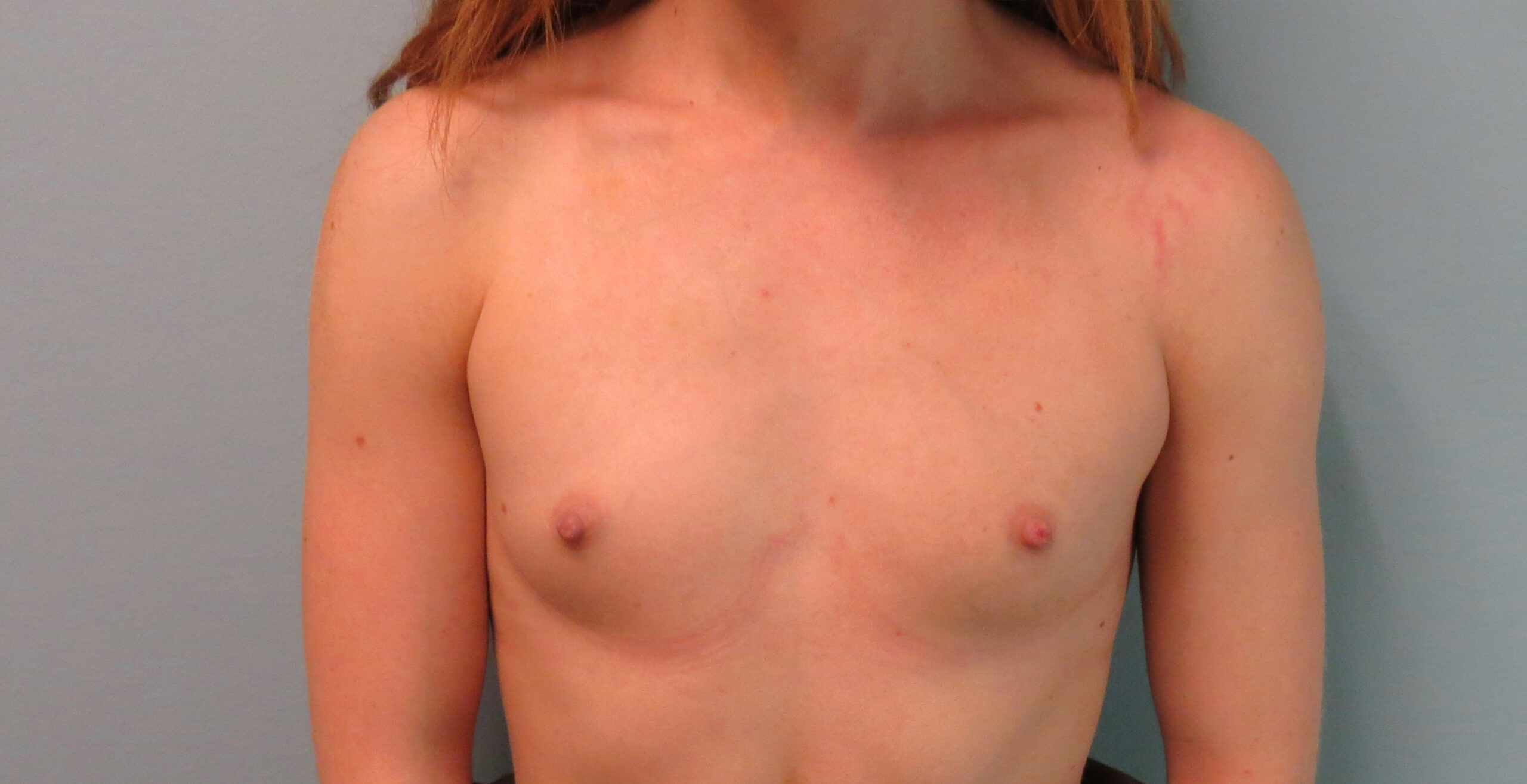
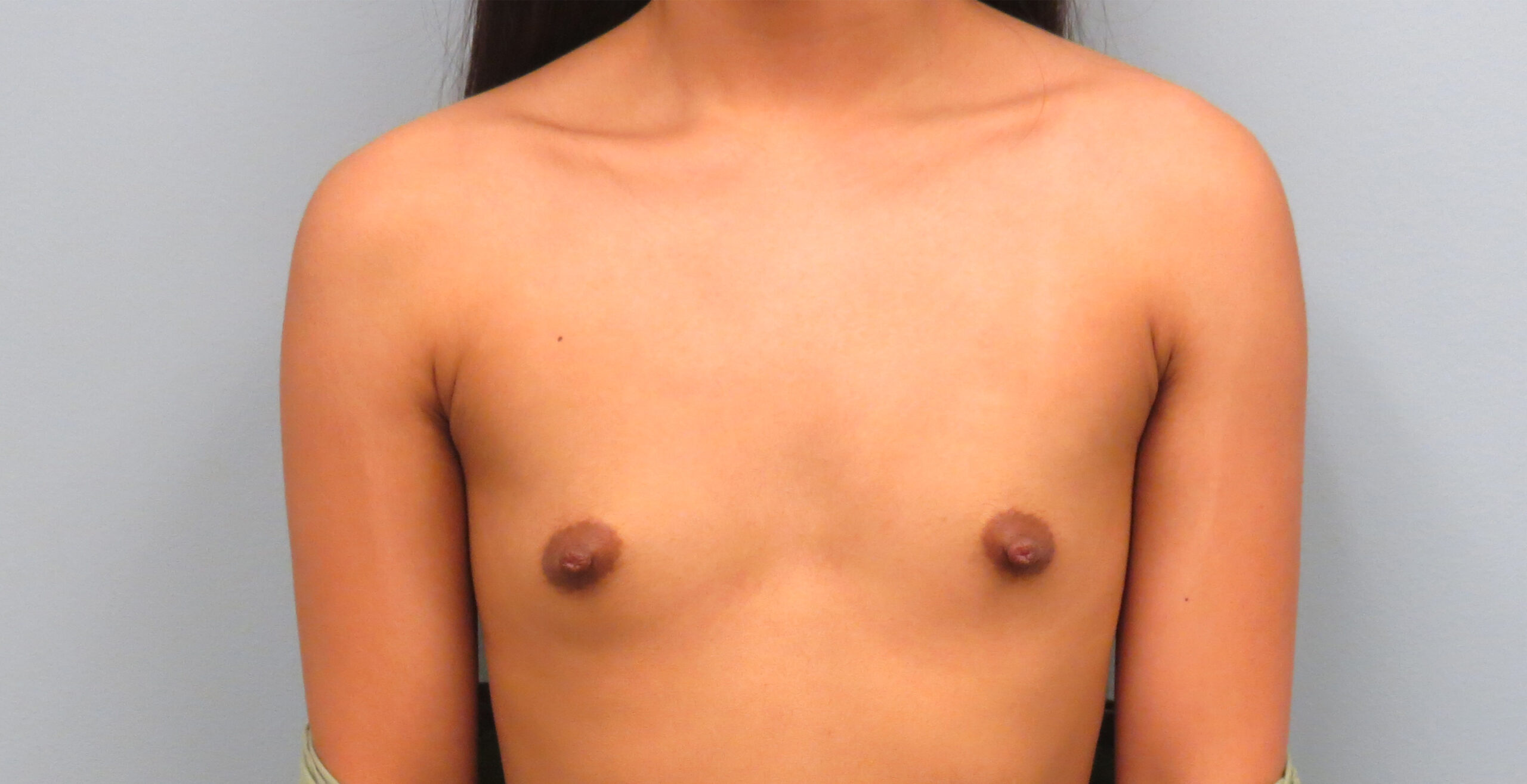
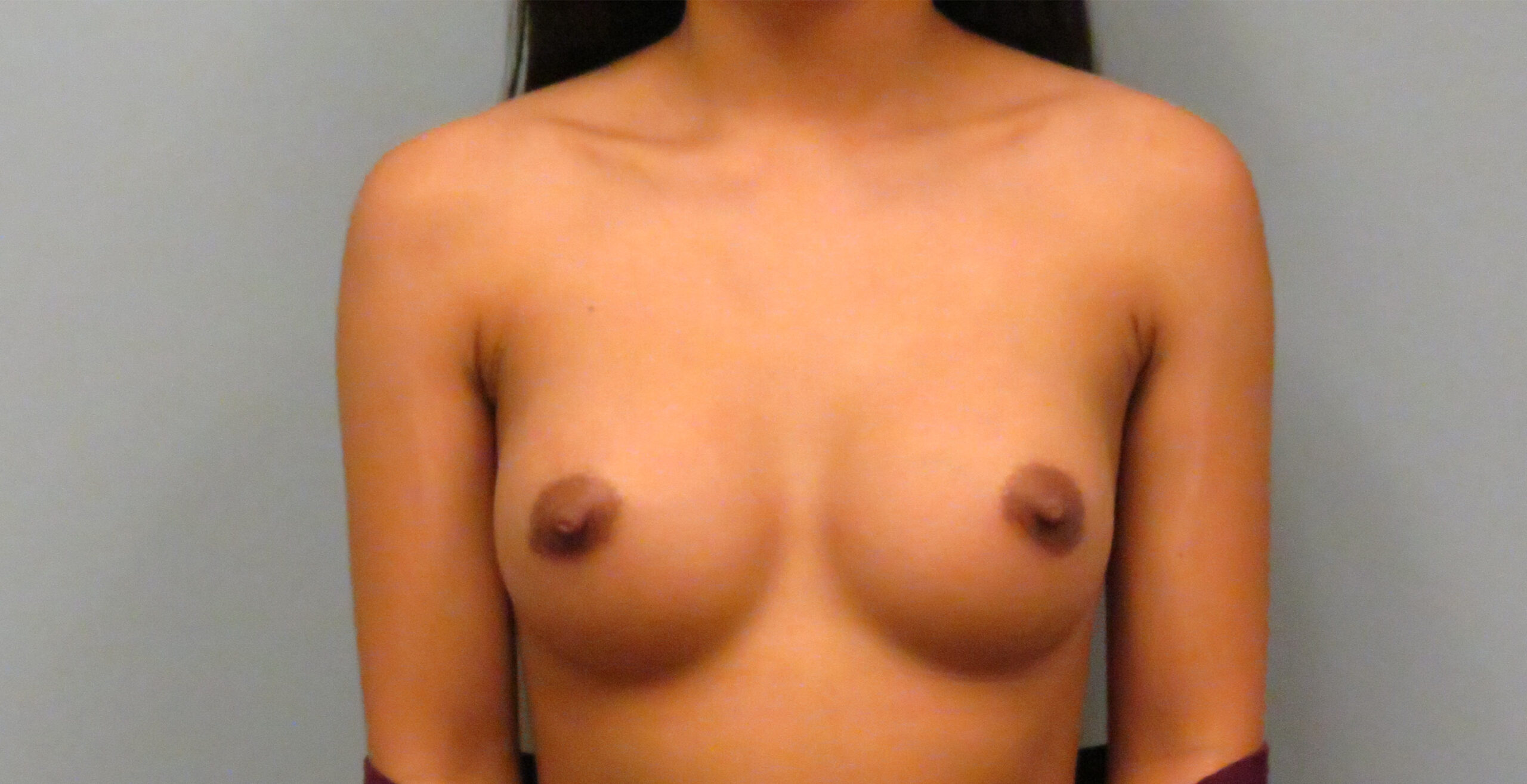
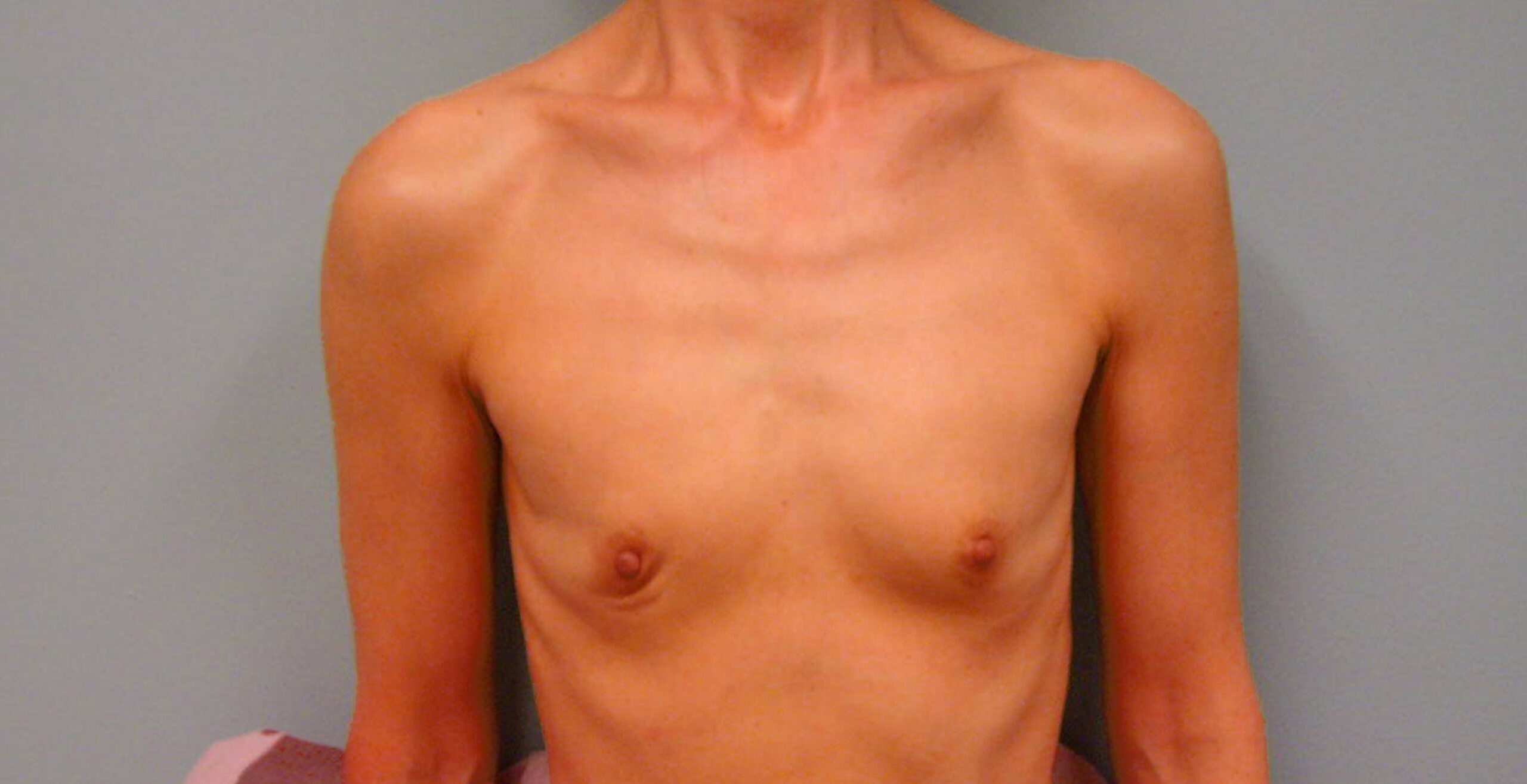
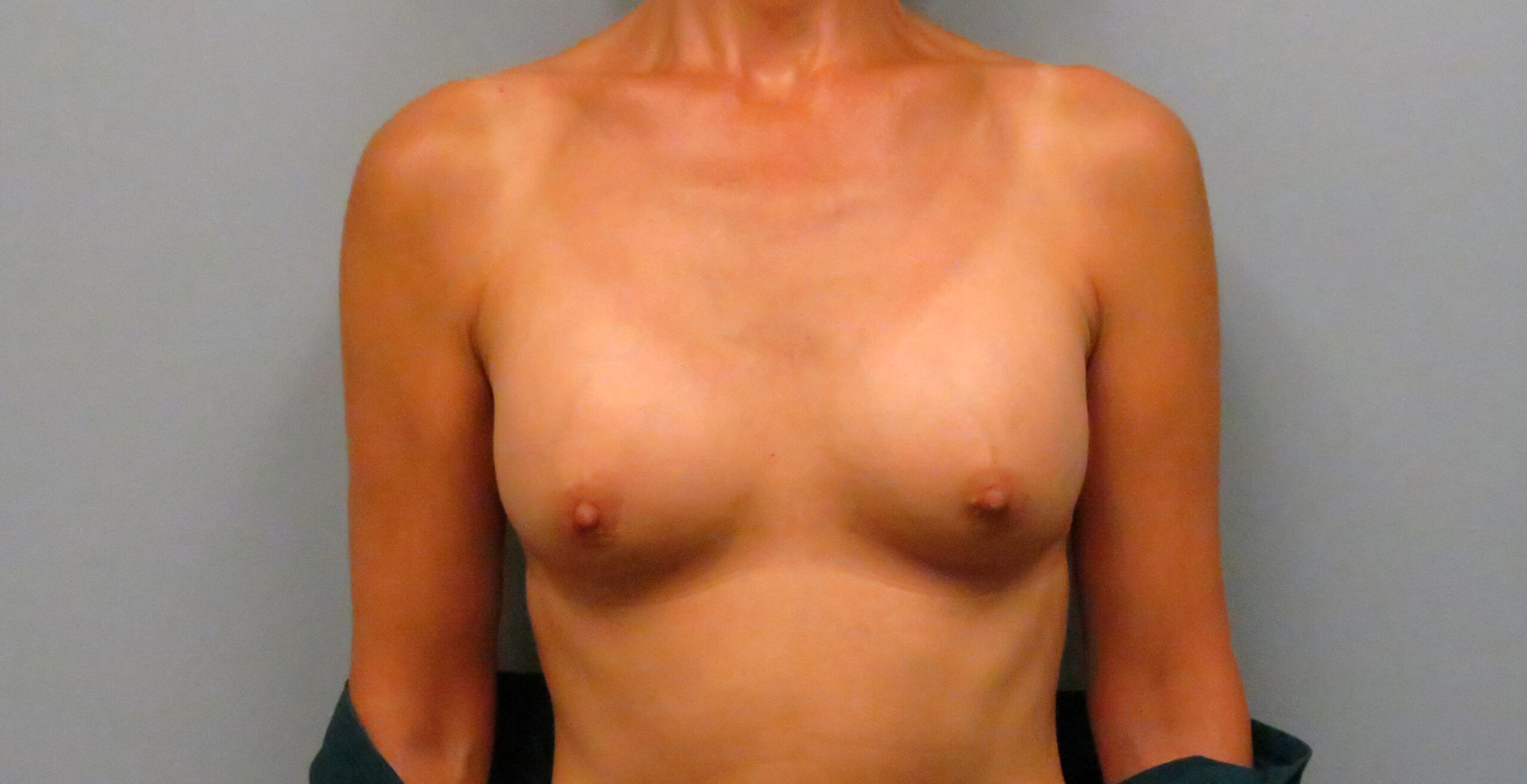
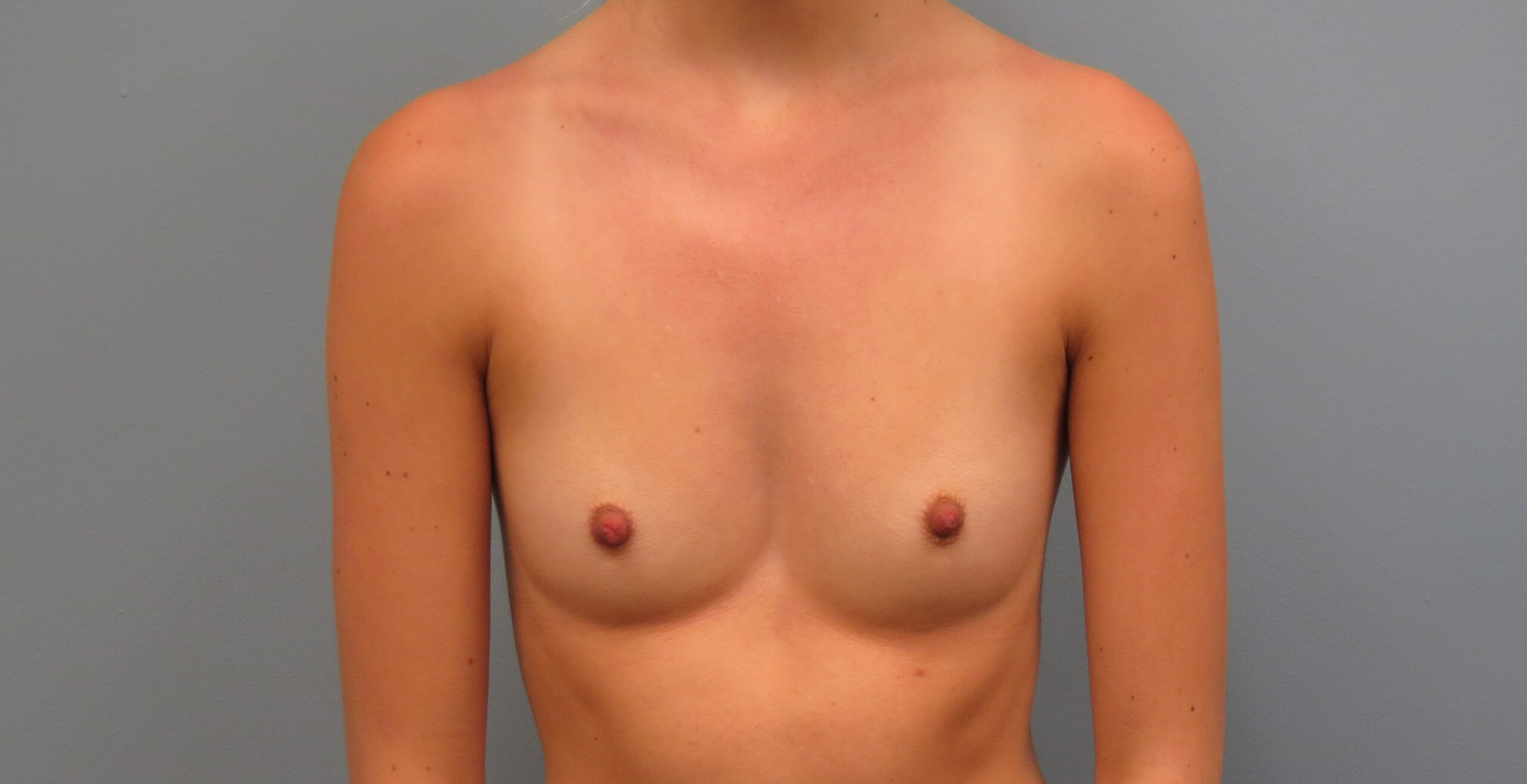
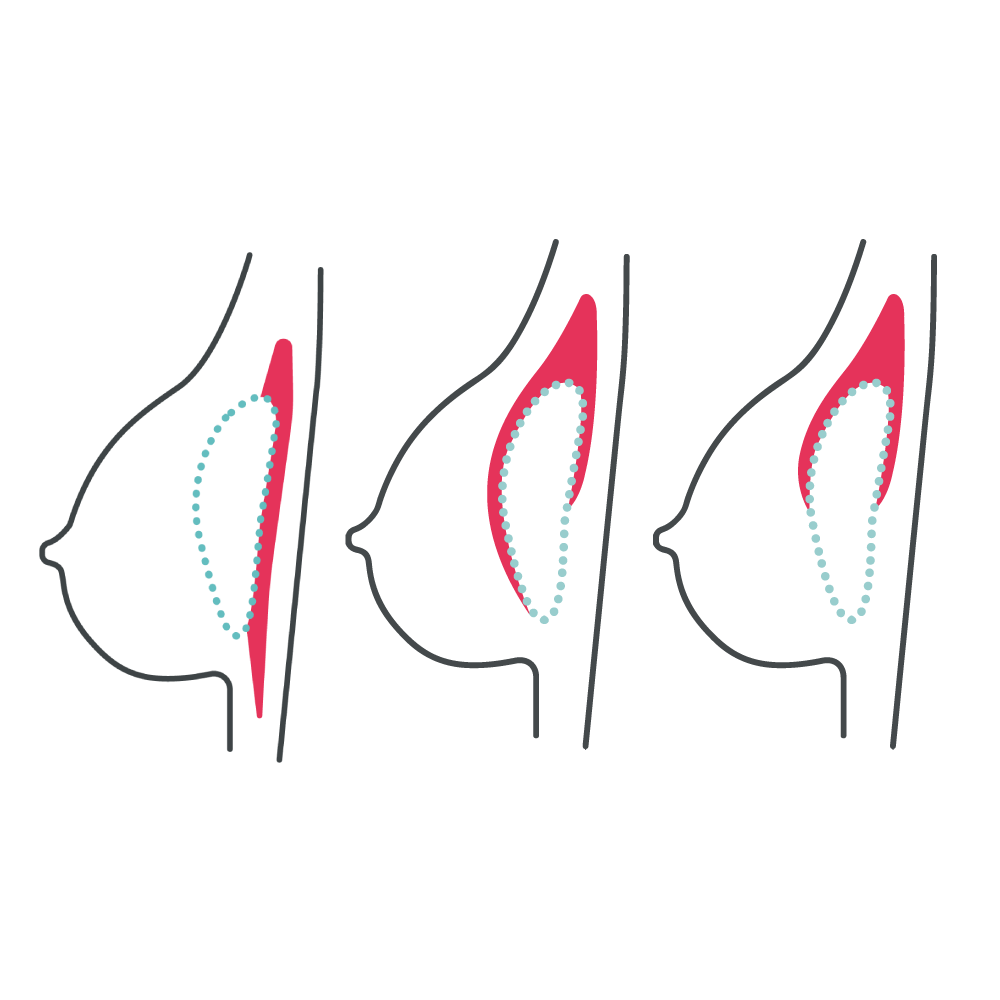
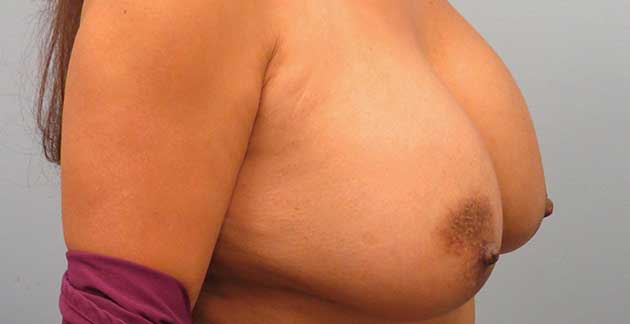
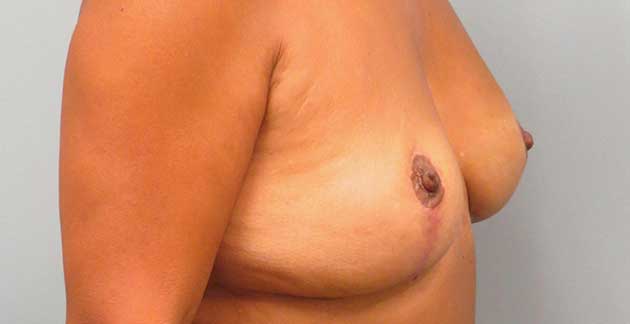
Pros: Depending on the amount of breast tissue a woman has, over the muscle may be an option and natural-looking results can be achieved. The recovery is generally easier in comparison to sub-muscular, with less initial discomfort.
Cons: Capsular contracture rates are higher with this approach, and rippling may be visible especially in women who have thinner skin. It can also be easier to see the edges of the implant under the breast tissue with this approach.
Pros: Placing implants under the pectoralis muscles decreases the capsular contracture rate to less than 10%. In thinner women, the added layer of the muscle over the upper and inner aspects of the implants helps to make the edges less visible and the curve of the breast appear to be more natural. It can also be easier to see the breast tissue more clearly on mammograms when implants are under the muscle.
Cons: The recovery for under the muscle tends to be more uncomfortable and last longer. It also commonly takes longer for the swelling to subside and for the breasts to settle. It can take several months to see the desired results.
Pros: Many patients who receive breast implants half under the muscle say their results feel soft, move naturally, and look indistinguishable from natural breast tissue. In our practice, this technique often plays a key role in both cosmetic enhancement and restoring confidence after breast cancer.
Cons:
Because the chest muscle is partially lifted, you may feel tightness or soreness in the upper chest during the first two weeks. Most patients return to light activity within 1–2 weeks and resume more movement by 4–6 weeks, depending on the procedure and implant type.


Depending on the procedure, recovery time can be any time from 4 to 6 weeks.
You can usually start walking within the first week, and can then slowly increase your exercise over next several weeks. You are generally back to full activity in 4 to 6 weeks.
The items needed for recovery can vary depending on the procedure. You can find our favorite products here.
We understand this is an important question when determining if the procedure you’re looking to have is within your budget. Unfortunately, there’s no one size fits all price range that we are able to share with you. It’s best to schedule a consultation with Anne Peled, M.D or her Physician Assistant to find what options are best for you.
Yes, this is a procedure that Anne Peled, M.D offers at her practice.
Older generation implants are thought to only last 10 years, but they are anticipating that newer ones will last from 20 to 25 years.
Many patients are candidates for breast augmentations. However, it’s best to consult with a plastic surgeon to determine if a breast augmentation is right for you.
Saline and silicone implants have different benefits depending on the patient. Newer silicone gel implants (a.k.a. “gummy implants”) are commonly used when silicone is selected.
Most patients receive smooth implants, but this is always a personalized discussion with each patient.
Saline: If a saline implant breaks, it will usually deflate over a period of days or weeks. Although it will cause the appearance to change, it is not dangerous.
Silicone: If a silicone gel implant ruptures the breast may feel different but there is no evidence that a ruptured silicone implant will make you sick. If your implant ruptures, we recommend having the implant removed and replaced.
Gummy Bear: It’s uncommon gummy bear implants to break, but they can. A break is generally detected on MRI, but the patient and surgeon don’t notice a difference. A ruptured gummy bear implant can change the breast shape or feel. We recommend removing and replacing the implant, but there is no evidence that a ruptured gummy bear implant poses a threat to your health.
Breast feeding can be impacted by any type of breast surgery, but many women are successfully able to breast feed after breast lifts or augmentations.
Our office has a scar management system that is customized for each patient.
Most people take 1 to 2 weeks off after surgery before they return to work, although that period can be longer if patients have additional/combined procedures involving different parts of their body.
This is dependent on the patient. As we continue to have technological advances and patients maintain a healthy lifestyle, results are expected to last longer than previous studies.
Having permanent loss of sensation is very uncommon after breast lifts or augmentations. Some decrease in sensation in the early recovery period is common, however, and resolves over weeks to months. Anne Peled, M.D. has unique training and takes every precaution possible to ensure sensation is preserved.
Insurance companies have specific criteria for covering breast reductions. If you meet these criteria, the insurance should cover this procedure, but every patient should check beforehand with their insurance providers.